Key points
1The church is called to reach the lost with the gospel, even through ordinary believers and even through suffering.
Pastor Simon walks through Acts 11:19-21, where believers scattered by persecution after Stephen's death kept speaking about Jesus in Antioch, crossing cultural barriers to reach both Jews and Gentiles despite having every reason to keep their heads down. He notes it wasn't apostles or famous leaders who did this evangelism but unnamed, ordinary believers, and shares his own story of nervously telling university roommates that Jesus was the most important thing in his life.
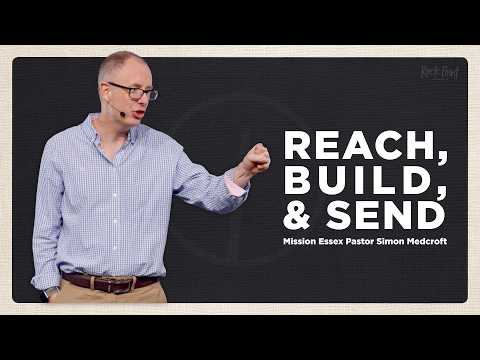
The mission of the church is to reach, build, and send
A story from life
Simon's first night at university, introducing himself as a follower of Jesus to three skeptical flatmates, and all three eventually asking to come to church
2The church is called to build up believers by teaching them God's Word.
Working through Acts 11:22-26, Pastor Simon shows how Barnabas, an encourager full of the Spirit, was sent to Antioch and brought in Saul, and the two of them taught the church for a full year. He argues teaching is God's ordained method of spiritual growth, and that this is why the believers there became so distinctively Christlike that they were first called Christians.
We're not all called to be Bill Bush, but we are all called to be involved
3A church's job is to keep people under good Bible teaching so their lives become recognizably Christian.
Pastor Simon uses his experience doing funerals to illustrate the point, contrasting the encouragement of hearing colleagues say someone was clearly a Christian against the disappointment of hearing no one ever knew. He urges ongoing engagement with the Bible, taught in services, small groups, or courses, as the means the Spirit uses to change desires, character, and boldness.
it is only through listening to this that the spirit will grow us and build us
4The church is called to send its money to help other believers in need.
From Acts 11:27-30, Pastor Simon shows how the young Antioch church sacrificially sent financial help to Christians they would likely never meet, facing famine far away. He connects this to grasping God's own generosity in sending His Son, and thanks Rock Point for funding seats and an assistant pastor for his church's plants in Essex.
5The church is called to send its best people to start new works, even at real cost to itself.
In Acts 13:1-3, Pastor Simon points out that the Holy Spirit called Barnabas and Saul — the church's best teachers — away from Antioch to start new churches, and the church didn't grumble but obeyed. He applies this to Rock Point's sending of people and money to the Echoes church plant, and to his own anxiety about losing key people to his next church plant in Essex.
God's ways are never easy. People had to suffer and be persecuted in the early church. But God's ways can be trusted
Will you open yourself up to being part of the exciting purposes of God as he reaches the whole world for Christ
Illustration
Cruise liner vs. battleship vs. lifeboat — three images of what a church could be, used to argue the church is called to be a lifeboat searching for the lost
Application
Pastor Simon frames the charge as joining the voices of reach, build, and send.
Speak about Jesus to those around you
Ordinary believers, not just pastors, are called to tell neighbors, coworkers, and friends about Jesus this week, even if it feels risky or awkward, trusting that the Lord's hand is with you regardless of the response.
Keep sitting under good Bible teaching
Stay regularly engaged in church, small groups, or Bible courses so the Spirit can keep growing your character and boldness, rather than treating church attendance as optional once you've shown up once.
Give generously to believers you'll never meet
Support Christians and church plants far from you, trusting that grasping God's own generosity toward you is what frees you to be that generous toward others.
Release your best people and resources for new works
Support sending people and money to new church plants like Echoes, even when it costs your own congregation, trusting that God's expanding purposes matter more than local comfort.
Take it into your week
Rewind AI contributed study material from the sermon transcript; church-authored wording and verified sermon quotes keep their own source. Always trust the sermon itself over anything here. How Rewind uses AI