Key points
1The Pharisees came to trap Jesus, not to learn
Jesus' ministry is drawing large crowds and setting people free, but the religious leaders, threatened by his countercultural message, try to force him into a statement that would let Rome do their dirty work, referencing King Herod's own marriage scandal and the beheading of John the Baptist for challenging it.
2Divorce is a practical issue before it's anything else
Pastor Daniel notes that forty to fifty percent of marriages nationally end in divorce, and locally in Maricopa County the rate is closer to seventy percent, so nearly everyone in the room has been touched by it directly or through family and friends.
In front of you is not an easy option and a hard option. You have two hard options
3Marriage is God's idea, aimed at oneness, from the beginning
Jesus bypasses the divorce question entirely and takes the Pharisees back to Genesis, reminding them that God created Adam and Eve and joined them as one flesh; Pastor Daniel walks through Genesis 1-2 and Ephesians 4 to show marriage was never a human invention but a mysterious, spiritual union.
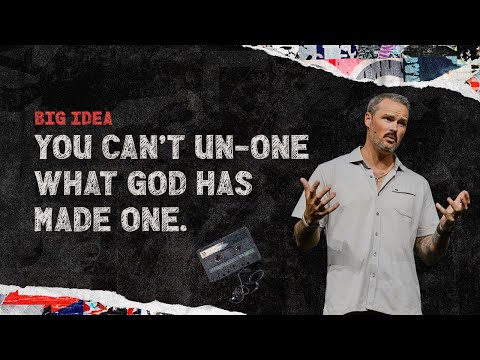
4You can separate the accounts, but you can't un-one what's been made one
Using the picture of a couple splitting bank accounts and custody after divorce, Pastor Daniel argues that lawyers can divide belongings but cannot undo the spiritual oneness marriage created, which is why psychologists say divorce can be harder to navigate than the death of a spouse — there's no real finality.
the greatest lie that we've been told is we hear things like, hey, your divorce is now final. It's a lie. There's no finality to divorce
5The Pharisees misused Moses' concession in Deuteronomy as a command
Pastor Daniel explains that Deuteronomy 24 was Moses' concession for men abandoning wives without cause, not a command to divorce, but rabbis twisted it into permission to divorce over trivial things like a wife's cooking or looks — showing how people bend scripture to justify what they already want.
6Jesus names the two biblical grounds for divorce and calls the rest sin
Jesus tells the Pharisees that Moses permitted divorce because of hard hearts, not because God intended it, and that remarrying after divorce apart from sexual immorality (and, per Paul, abandonment) amounts to adultery — but Pastor Daniel stresses that naming it sin is good news because sin can be forgiven at the cross.
7God hates divorce because of how deeply it wounds people
Quoting Malachi's declaration that God hates divorce because of the cruelty it inflicts, Pastor Daniel cites statistics on children of divorce facing higher rates of health problems, psychological struggles, and dropping out of school, showing the reach of divorce is wider than we admit, while also noting second and third marriages fail at even higher rates than first ones.
Our job is to love people in their brokenness, not rub their faces in their brokenness
Your past doesn't have to define you. The worst moments of your life, they are not your identity
A story from life
Billy Graham's story about his friend Alan Emery's father who sent a limousine to retrieve a drunk pastor and prepared the best guest room for him
you and I, we can't un one what God has made one
Application
Pastor Daniel's charge is that whatever side of divorce you're on, don't settle for the lie that it's simple, easy, or final — fight for oneness, or receive the grace that covers you.
Single people, count the cost before marrying
If you're entertaining marriage, take seriously the high bar it is; deal with selfishness, pride, or sexual immorality now rather than assuming marriage will fix it.
Married couples, fight for your marriage
If your marriage is struggling, don't treat divorce as the easy way out — get on your face in prayer together, ask the Holy Spirit to help you navigate the conflict, and use the church's resources.
Get safe if you're in an abusive marriage
Pastor Daniel is clear that scripture doesn't require staying in an abusive marriage; come to the church for help getting safe and getting out.
Receive forgiveness if you've been divorced
If divorce is part of your story, know that it can be forgiven and covered by the cross, and refuse to let shame define you going forward.
Don't shame those who've walked through divorce
If you haven't experienced divorce, resist treating divorced people as second-class Christians; remember all of us have parts of our story we didn't get right.
Take it into your week
Rewind AI contributed study material from the sermon transcript; church-authored wording and verified sermon quotes keep their own source. Always trust the sermon itself over anything here. How Rewind uses AI