Key points
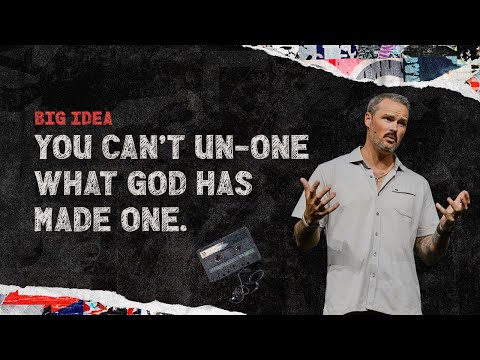
1The 'mad as a hatter' mercury poisoning is a picture of how cultural ideas seep unnoticed into the church.
Pastor Chris tells the history of hatmakers being poisoned by mercury nitrate used to waterproof felt hats, causing tremors, hallucinations, and psychosis long before anyone understood why. He uses this as a picture of Martin Luther's two kingdoms—the 'left hand kingdom' of culture and the 'right hand kingdom' of God—and how ideas from the culture we spend 165+ hours a week in can quietly poison our theology.
2A widespread but unbiblical distortion says God has a hyper-specific hidden will, and one wrong move gets you discarded.
He cites the statistic that 70% of Christians believe they've failed to follow God's hidden will for their life, whether through their own sin, someone else's sin against them, or just the storms of life—he shares losing his wife to suicide in 2021 as his own storm. This creates anxiety, analysis paralysis, and a 'shell game' view of God deciding our fate.
A story from life
Pastor Chris shares losing his wife to suicide in July 2021 and becoming a single father of five, as an example of life storms that can make a person feel outside God's will
3Jeremiah 18's potter's house scene reveals God's true character: He reshapes marred clay instead of throwing it in the fire.
Pastor Chris walks through Jeremiah going down to the Valley of Hinnom (Gehenna), a place of judgment and refuse, expecting to see broken pottery discarded—but instead watches the potter pick up the marred clay and reform it into another pot. He connects the potter imagery to Genesis 2:7 and Ephesians 2:8-10, showing we are God's handiwork, and to Israel's story as a pattern for how God is the same yesterday, today, and forever.
It's not discarding, it's not rejection, it's redemption
4God's will for you is a rhythm, not a recital.
Using the image of a dance recital where every step must be hit exactly versus a father giving his daughter open-handed rules at a wedding dance floor, he explains that God's revealed will—do justice, love mercy, walk humbly (Micah 6:8)—applies across almost any vocation. The question isn't 'teacher or plumber or pastor' but whether you do justice, love mercy, and walk humbly in whichever one you choose.
God's will for you is a rhythm, not a recital
5God redeems when we rebel; He does not discard.
He points to Psalm 37 and Romans 11:29 to show God's gifts and calling are irrevocable, and no sin outsins the grace of the cross. He shares a C.S. Lewis quote about not setting ourselves up as a higher tribunal than God by refusing to accept His forgiveness, naming that refusal as pride rather than piety.
God redeems when we rebel, he doesn't discard
the cross doesn't secure a perfect plan, it secures a perfect savior
Illustration
C. S. Lewis quote on self-forgiveness and setting oneself up as a higher tribunal than God
6Our scars are not meant for shame; they're meant for God's glory.
Pastor Chris explains that a good God would simply bury our mistakes and never mention them again, but a better God uses the cracks and fractures to bring others to know Him. He describes turning the enemy's reminders of past failure into testimony, echoing the healed blind man's line, 'I once was blind and now I see,' and ties it to Revelation's picture of overcoming by the blood of the Lamb and the word of our testimony.
my scars are not meant for shame, they're meant for his glory
I once was blind and now I see
Application
Pastor Chris frames the charge around the dance floor he gave his daughter: God gave rules, not a rigid recital, so live inside do justice, love mercy, and walk humbly wherever you are.
Stop treating God's will as a tightrope
If you believe one wrong decision or sin has knocked you permanently off God's plan, recognize that belief as a cultural distortion rather than what the Bible teaches.
Pursue justice, mercy, and humility in your calling
Whatever job or path you choose—teacher, plumber, pastor—ask whether you're doing justice, loving mercy, and walking humbly there, rather than searching for one hidden 'correct' occupation.
Let God forgive you instead of overruling Him
If God calls you forgiven, accept it rather than moping or punishing yourself further, which the sermon names as setting yourself up as a higher judge than God.
Turn your past failures into testimony
When shame from past mistakes resurfaces, respond by thanking God for how He redeemed that moment, using it to show others His goodness instead of hiding it.
Take it into your week
Rewind AI contributed study material from the sermon transcript; church-authored wording and verified sermon quotes keep their own source. Always trust the sermon itself over anything here. How Rewind uses AI