Key points
1Jesus used the vine and branches as a familiar picture to teach a hard truth quickly
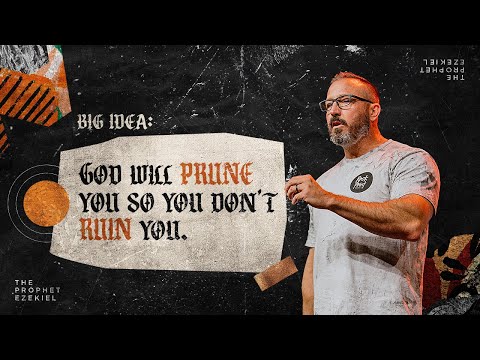
As Jesus and the disciples walked from the upper room through the Kidron Valley toward the Mount of Olives, they likely passed vineyards, which prompted the illustration. Pastor Mark explains that an untended vine tangles and grows in on itself, producing poor fruit, and needs a vinedresser to prune it toward the light so it can reach its true potential.
2The vine was Israel's own symbol, and Jesus claims to be the true vine
Drawing on Psalm 80, Pastor Mark notes that Israel was pictured as a vine God brought out of Egypt and planted, but one that became infected and needed restoring. Jesus declaring Himself the true vine means He is the true Israel, the one on whom all God's promises now rest, and eventually people from every nation get grafted into Him.
When an expert prunes a grapevine, it helps the plant become its true self and reach its full potential
3Abiding is not automatic — it means setting other things aside to depend on Jesus alone
Pastor Mark describes abiding as offering ourselves to God so He can develop the fruit of the Spirit in us — love, joy, peace, patience, kindness, goodness, faithfulness, gentleness, and self-control. He notes the marks of abiding: a sense of our own weakness and need for Christ, hunger for God's word, willingness to be accountable to other believers, and a growing confidence that we can do what God has planned for us.
4Praying in Jesus' name means aligning with His will, not commanding God to serve ours
Pastor Mark unpacks Jesus' promise that the Father will give whatever is asked in His name, clarifying it isn't a magic formula but a plea for God's glory and kingdom purposes. He points to the way Jesus Himself humbly accepted the Father's plans, modeling what it looks like to pray according to God's will rather than selfish desire.
5Abiding in Jesus and praying according to His will can bring the world's hatred, just as it did for Jesus
Pastor Mark tells the story of Dietrich Bonhoeffer, who defied Nazi ideology that Jewish converts to Christianity shouldn't be baptized, was sent to Flossenburg concentration camp, and was executed in 1945 just before liberation. Bonhoeffer wrote that suffering is the badge of the true Christian, and Pastor Mark connects this to Jesus' own life, hated from Herod's attempt to kill Him as a child through the religious leaders who had Him crucified, because His light exposed their darkness.
suffering is the badge of the true Christian
A story from life
Story of Dietrich Bonhoeffer, the Lutheran pastor executed at Flossenbürg in 1945 for resisting Nazi persecution of Jewish converts
6Persecution today confirms Jesus wasn't paranoid — the world really does treat His followers as He was treated
Pastor Mark counters an article claiming Jesus was paranoid and delusional near His death, citing statistics from the Center for the Study of Global Christianity and Voice of the Martyrs that roughly 900,000 Christians have been murdered for their faith in the last decade alone, about one every six minutes. He frames this as proof that it was the world, not Jesus, that was and is threatened by the truth.
His light revealed their darkness
Illustration
Article accusing Jesus of paranoia, claiming His death was a political accident and diagnosing Him with delusions of grandeur
Illustration
Statistics from the Center for the Study of Global Christianity and Voice of the Martyrs on the scale of Christian persecution and martyrdom
Application
Pastor Mark's charge is to actually abide in Christ rather than just believe in Him, even when that costs something.
Offer yourself to God for pruning
Set aside the things you've drawn strength from apart from Jesus and let His words cut away what won't produce good fruit in your life.
Grow hungry for God's word and accountability
Let a desire for Scripture and voluntary accountability to other Christians become something you want rather than something you fear.
Pray according to God's will, not your own agenda
When you pray in Jesus' name this week, ask God to align your desires with what He wants most rather than trying to get Him to do what you want.
Expect and stand firm through opposition
Whether at work, in your small group, or at school, don't be surprised when abiding in Christ draws hostility; live at peace where you can, but stand firm for God when it's time.
Take it into your week
Rewind AI contributed study material from the sermon transcript; church-authored wording and verified sermon quotes keep their own source. Always trust the sermon itself over anything here. How Rewind uses AI