Key points
1Keeping score works in sports, but it destroys relationships
Pastor Bill opens with the frustration of watching his kids' t-ball and soccer games where scores weren't kept, arguing that sports need score to teach competition, teamwork, and how to win or lose with grace. He then turns it: in relationships, where we should never keep score, we do it anyway — bringing up old wrongs until arguments become 'historical' instead of just hysterical.
21 Corinthians 13 says love keeps no record of being wronged
Pastor Bill points to the phrase in verse 5 that love is not irritable and keeps no record of wrongs, noting the two ideas sit in the same sentence because keeping score is what makes us irritable. Reverse-engineered, keeping no record of wrongs means love forgives.
forgiveness is a blessing, not a burden
3Forgiveness is widely misunderstood, and that misunderstanding is what blocks us from doing it
He works through a list of what forgiveness is NOT: a feeling, forgetting, minimizing what happened, conditional on the other person, the same as resuming a relationship (reconciliation), forfeiting justice, or weakness. He stresses forgiveness starts a relationship's path back together — reconciliation begins with forgiveness but forgiveness doesn't require or equal reconciliation.
It takes one to forgive, it takes two to reconcile
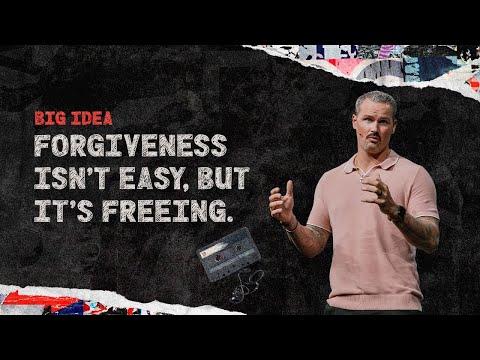
4Forgiveness literally means letting go and moving away from the offense — for your own sake
Pastor Bill explains the Greek word behind forgiveness means to let go, to leave, to go away from — and the one who moves away is you, not the offender. This matters most when reconciliation is impossible, such as being bitter toward someone who has died; forgiveness is still your only way out of that valley.
What forgiveness is is you're letting yourself get away from it
5Jesus' parable of the unforgiving servant shows we've all been forgiven a debt we could never repay
Working through Matthew 18, he shows Peter asking how many times he must forgive, offering seven as a generous answer, and Jesus replying 70 times seven — a Hebrew exaggeration meaning without limit. In the parable, a servant forgiven an impossible debt by the king turns and refuses to forgive a fellow servant's small debt, and Pastor Bill identifies us as that forgiven-yet-unforgiving servant.
6Refusing to forgive traps you in a prison of your own making
He unpacks the parable's ending, where the unforgiving servant is handed over for torture until he pays his entire debt, which he never can. Pastor Bill says this either signals someone doesn't yet grasp the gospel, or it means a genuine believer is choosing to imprison themselves for life by refusing to let go.
7Forgiveness is greater than repayment, revenge, and resentment
He walks through three alternatives people default to instead of forgiving: demanding repayment (which is justice, not grace), seeking revenge (illustrated with the Princess Bride's Inigo Montoya, who spent 20 years on vengeance only to find he had no life left), and resentment (quoting Frederick Buechner that holding a grudge ends with the grudge holding you). Each one keeps you stuck rather than free.
You start holding a grudge, but in the end the grudge holds you
We are most like beasts when we kill. We're most like men when we judge. We're most like God when we forgive
The key to forgiving is to stop thinking about what's been done to you and start thinking about what Jesus has done for you
Illustration
Quote from Frederick Buechner on resentment as a feast that consumes the one holding the grudge
A story from life
Pastor Bill's father-in-law rides a heavy electric-assist mountain bike, discovering the motor empowers his pedaling rather than replacing it
Application
Pastor Bill frames it as getting on the bike Jesus already powered: relinquish, respond, and repeat.
Relinquish your right to get even
Let go of the demand for repayment or revenge against the person who hurt you — this is the first pedal stroke of forgiveness.
Respond to evil with good
Instead of matching the hurt done to you, choose good toward the person, trusting that this is how love keeps no record of wrongs.
Repeat it as often as necessary
Forgiveness isn't a one-time feeling; keep choosing to let go and respond well every time the hurt resurfaces, like continuing to pedal.
Stop rehearsing what was done to you
Quit reliving and adding to the offense in your mind — that pain is on your list, not theirs, and it's destroying you more than they did.
Look to what Jesus has done for you
Fix your attention on the cross and the debt already paid for you instead of the debt someone else owes you; that's the power source that lets you actually forgive.
Take it into your week
Rewind AI contributed study material from the sermon transcript; church-authored wording and verified sermon quotes keep their own source. Always trust the sermon itself over anything here. How Rewind uses AI